
Interior Forecasters Are Calling It Acid Cottage. Here’s What It Is and Whether It Belongs in Your Home
Some trends arrive fully formed. Others build quietly at the edges of the design conversation until, one day, they have a name.
Acid Cottage has a name now. Trend forecasting house MC&Co recently published it as a named direction in their interior forecast, describing it as “a charged interpretation of familiar space.”
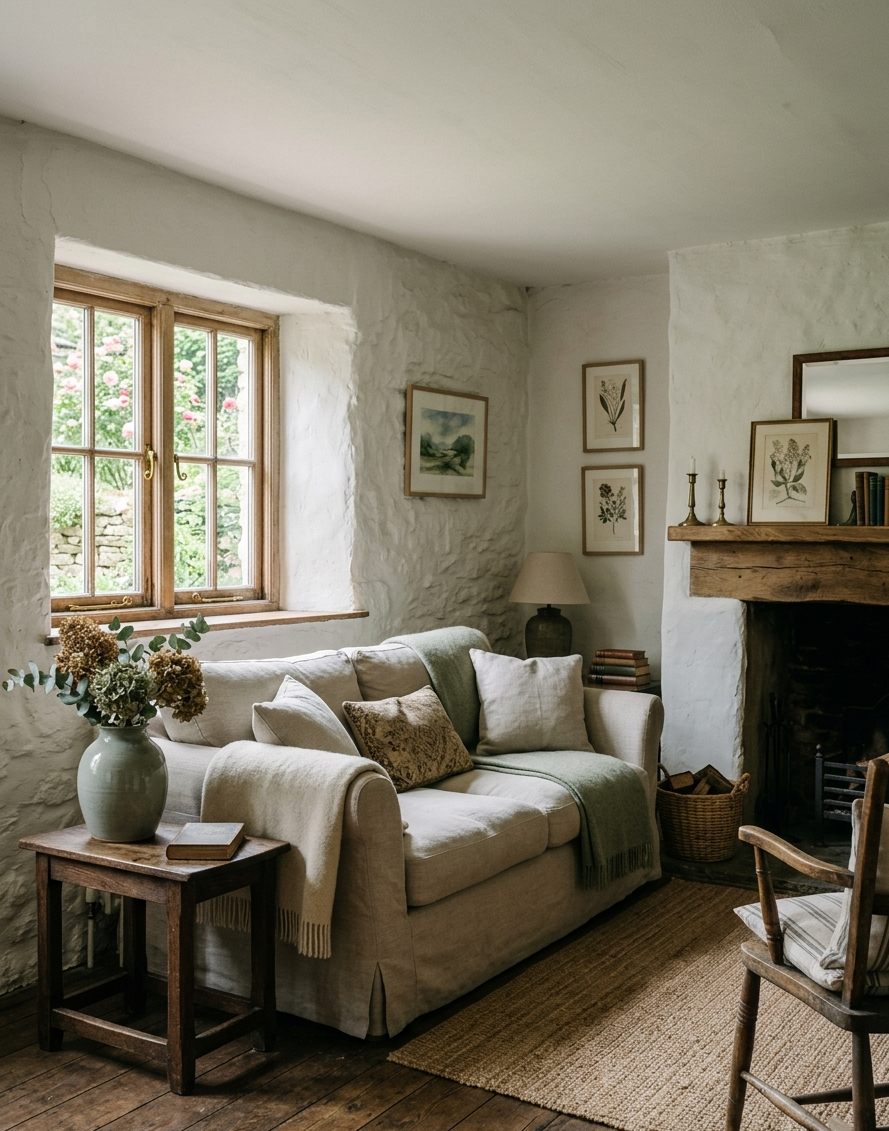
The name tells you most of what you need to know. Take the cottage interior — the warm familiarity of timber, linen, botanical prints, layered pattern, the sense of a space that has been lived in rather than assembled. Then charge it. Saturate it. Introduce high-chroma colour with clarity and intent. The familiar structure remains. What changes is the energy.
In this post I want to explain what Acid Cottage actually is, why it’s emerging now, and — most importantly — how to approach it in a way that makes the space feel genuinely good to live in, not just interesting to look at.
What Is Acid Cottage?
Acid Cottage sits within a broader movement that design forecasters are tracking: the re-engagement with domestic familiarity, but with greater intensity. Heritage references, craft traditions, recognisable spatial language — all of this remains relevant. What shifts is how it is assembled and how far it is pushed.
MC&Co describe it as sharing surface-level DNA with cottagecore and ‘grandma-core’ — florals, gingham, timber, layered interiors. The distinction is in tone and energy. Colour is heightened. Pattern is applied with more deliberate intent. Spaces carry what they call “personality, humour, and visual movement.”
Concretely, it looks like this:
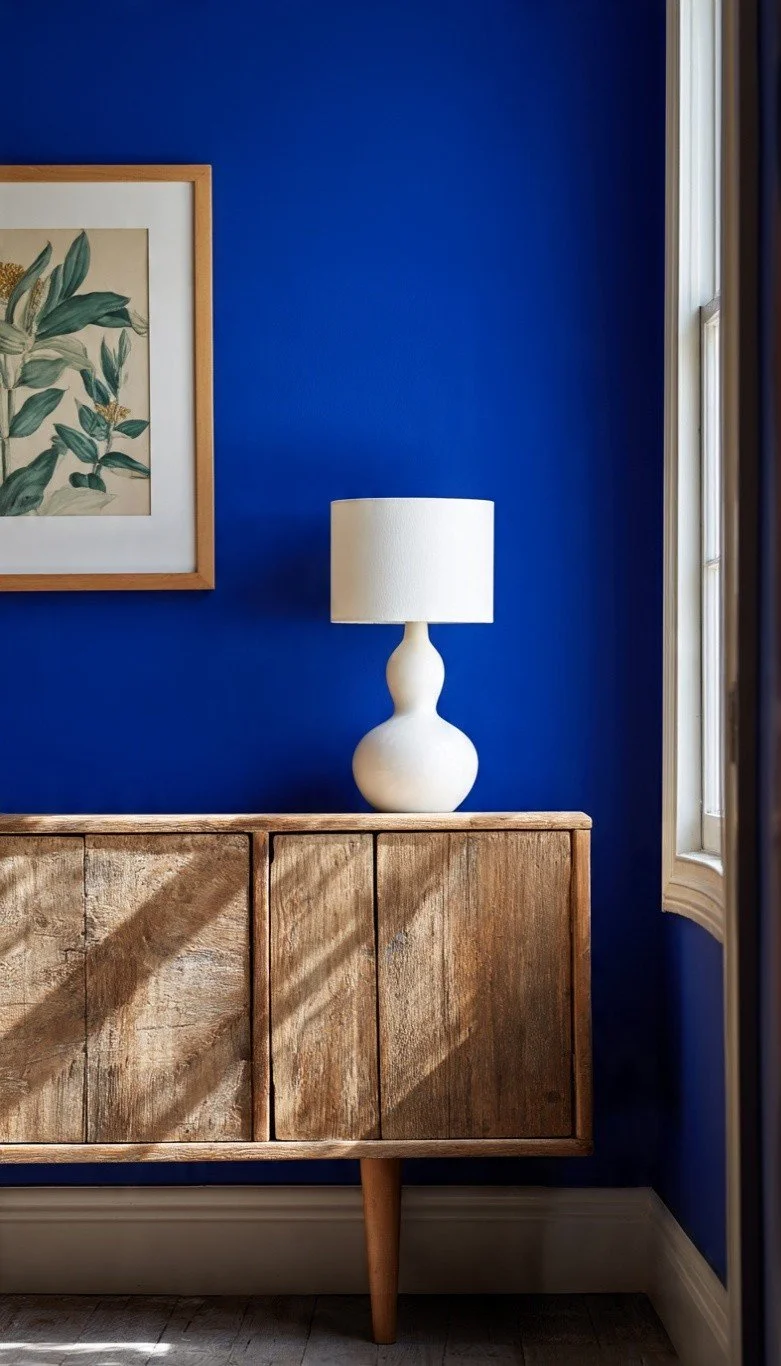
– Cobalt blue wall panelling alongside a heritage sink and floral tiles
– Saturated cabinetry in a kitchen otherwise full of natural wood and worn stone
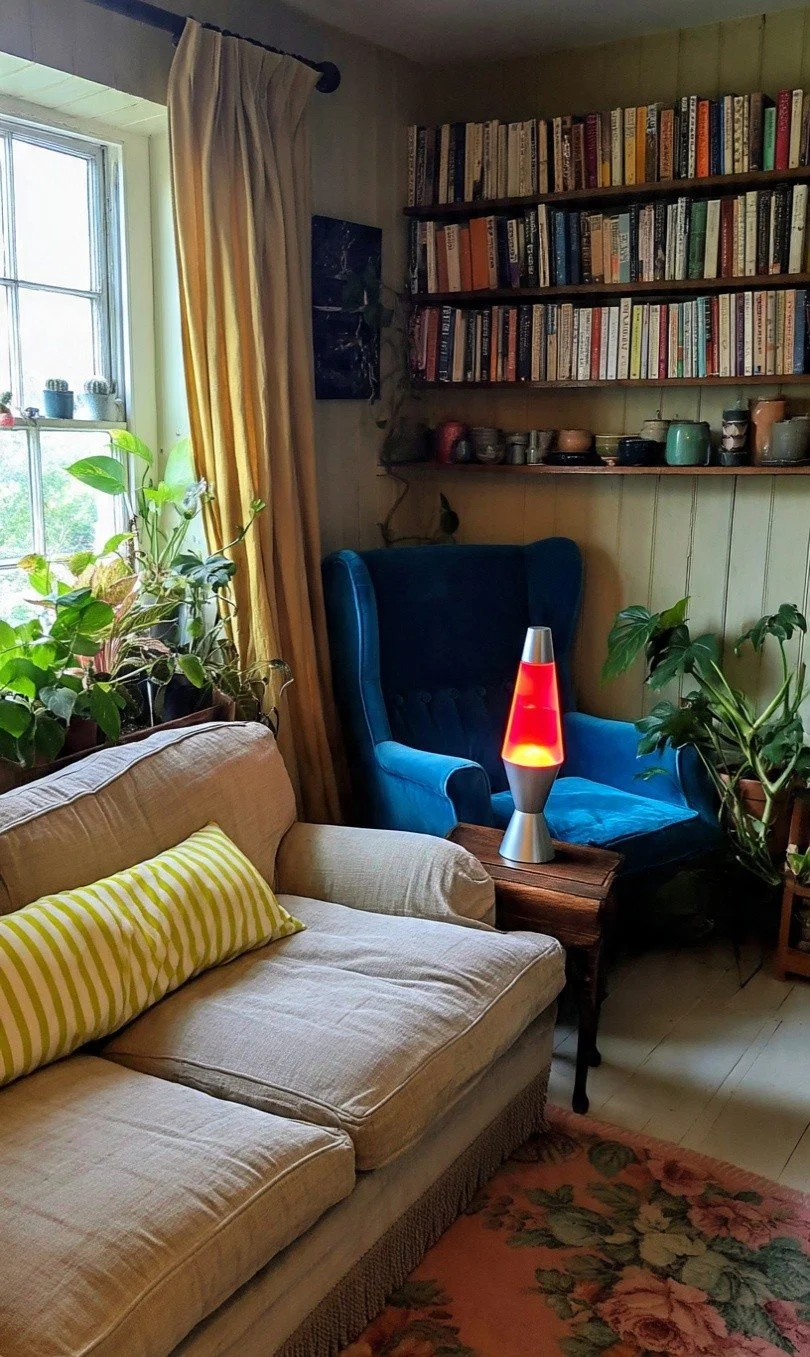
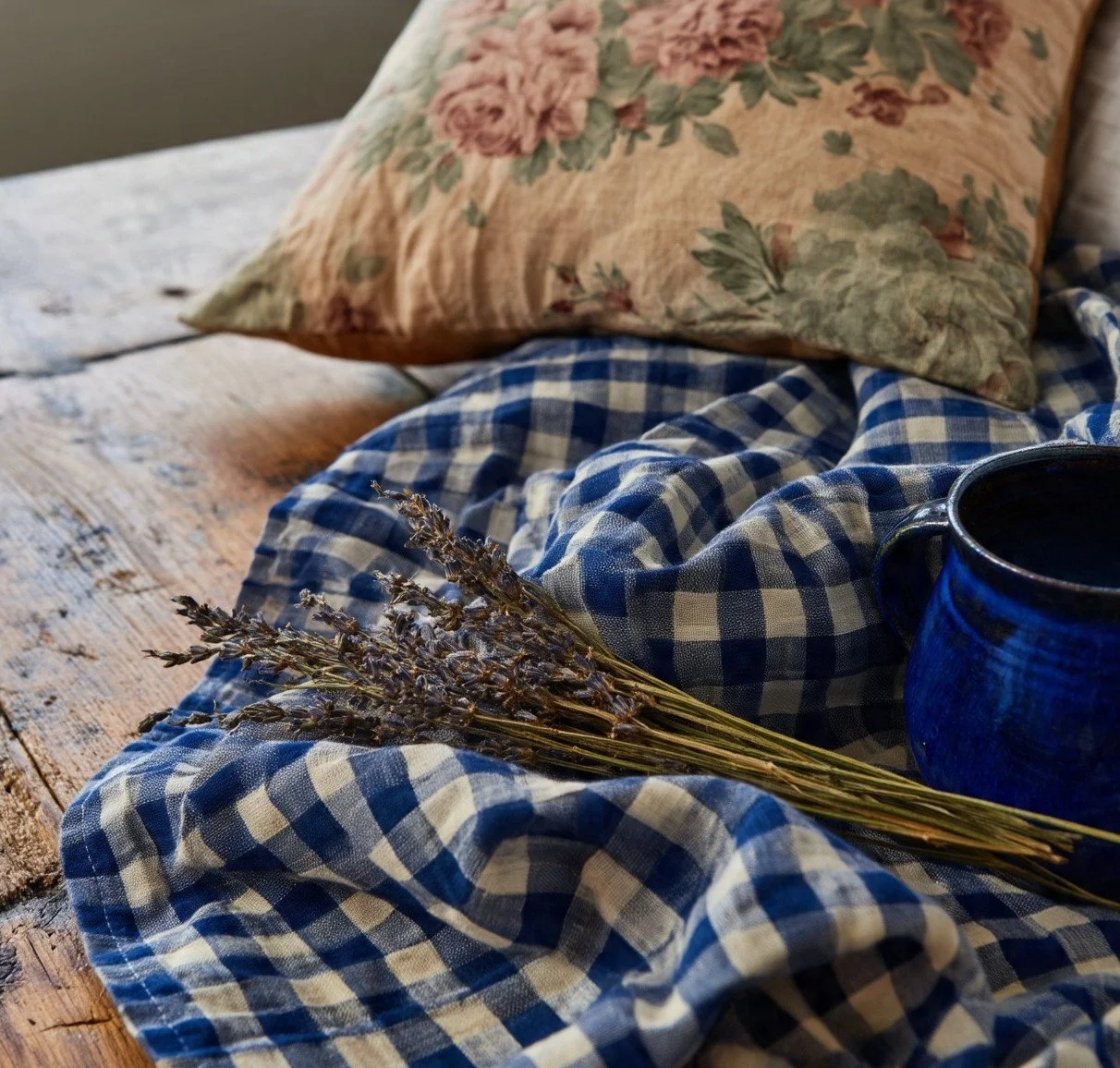
– Graphic textiles — bold stripes, oversized checks — in a room grounded by antique furniture
– Tabletop and accessories in high-chroma tones, used as entry points into the palette
– Pattern stacked on pattern: florals with stripes, stripes with checkerboards, each layer adding density without losing coherence
The cottage foundation stays. The colour story is what changes — and it changes dramatically.
Where Does It Come From?
To understand Acid Cottage, it helps to understand the two impulses it brings together.
The Cottage Instinct
The appeal of the cottage interior has always been partly about slowness and authenticity. Natural materials, the sense of accumulated time, a space that smells of beeswax rather than diffused essential oil. Over the past five years, what started as cottagecore on social media has matured into something more considered: a genuine preference for spaces that feel handmade, imperfect, and real.
By 2026, this instinct has become mainstream enough that design commentators are calling it ‘modern English cottage’ — less nostalgic performance, more a serious aesthetic position.
The Colour Reckoning
Simultaneously, the interior world has been experiencing a colour reckoning. After years of greige and pale oak and safe neutrals, homeowners started asking: why does my house look exactly like everyone else’s? Dopamine decor — the use of saturated colour for emotional uplift — offered an answer. And the maximalist wave that followed brought back the idea that bold colour is a decision, not a risk.
The ‘acid’ end of the palette is the most demanding expression of this. Lime green, electric yellow, cobalt, tangerine. Used carelessly, it overwhelms. Used well, it is genuinely exhilarating.
The Collision
What makes Acid Cottage interesting as a design direction is the specific chemistry between these two impulses. MC&Co describe the underlying shift as behavioural: homes are increasingly being used as platforms for self-expression. The space is no longer trying to achieve a singular, resolved, photographable outcome. It is layered with mood, personality, and individual perspective.
The cottage provides the structural grammar for this — the warm base, the natural materials, the recognisable forms. The acid colour provides the individual statement. The result is what MC&Co call “comfortable chaos”: familiar and expressive at the same time.
From a purely material perspective, there is also something interesting happening. The roughness of cottage materials — the grain of aged timber, the weave of linen, the imperfection of hand-thrown ceramics — creates a kind of visual texture that absorbs bold colour rather than fighting it. In a minimal, polished space, cobalt reads as cold. Against warm plaster and natural wood, it becomes something else. The cottage softens the acid. The acid activates the cottage.
The Wellbeing Question
This is where I want to spend some time, because it is the part that most trend coverage skips.
There is a real tension at the heart of Acid Cottage. The cottage aesthetic, at its best, creates restorative spaces: low stimulation, natural materials, a connection to the organic world. Acid colour does the opposite. It raises arousal. It creates alertness and energy. Dopamine decor is called dopamine decor for a reason.
So can you have both? Yes — but only if you are intentional about it.
Room Purpose Is Everything
A bedroom should feel restorative. High-saturation colour on large surface areas works against this — it raises arousal when the room’s job is to lower it. But a kitchen, a hallway, a study — these are activating spaces. They can carry more energy. They can hold the acid.
The rule of thumb: bring Acid Cottage into rooms where you want to feel engaged. Keep the restful rooms soft.
Texture Does the Regulating
Natural materials have a documented calming effect in environmental design research. They reduce arousal and create a sense of groundedness. In an Acid Cottage scheme, the cottage elements do the heavy lifting psychologically. The linen, the aged wood, the hand-thrown ceramic — these allow bold colour to exist in the space without the space becoming overwhelming. The texture is what makes the acid liveable.
This is also why MC&Co note that materiality “sharpens the overall experience”: the interplay between natural anchors and heightened colour defines how the aesthetic actually feels.
One Bold Element Is Usually Enough
One of the counterintuitive things about saturated colour is that a single large element is often easier to live with than several smaller ones. A single cobalt wall reads as a decision. Three cobalt accessories read as anxiety. In Acid Cottage, the acid should be chosen and positioned with care. It does not need to be everywhere to be felt.
How to Approach It in Your Own Home
Build the Cottage Foundation First
Get the base right before you introduce colour. Natural materials, warm textures, earthy neutrals as the dominant background. Linen, worn wood, hand-thrown ceramics in muted tones. Establish the cottage, then charge it.
Choose One Entry Point
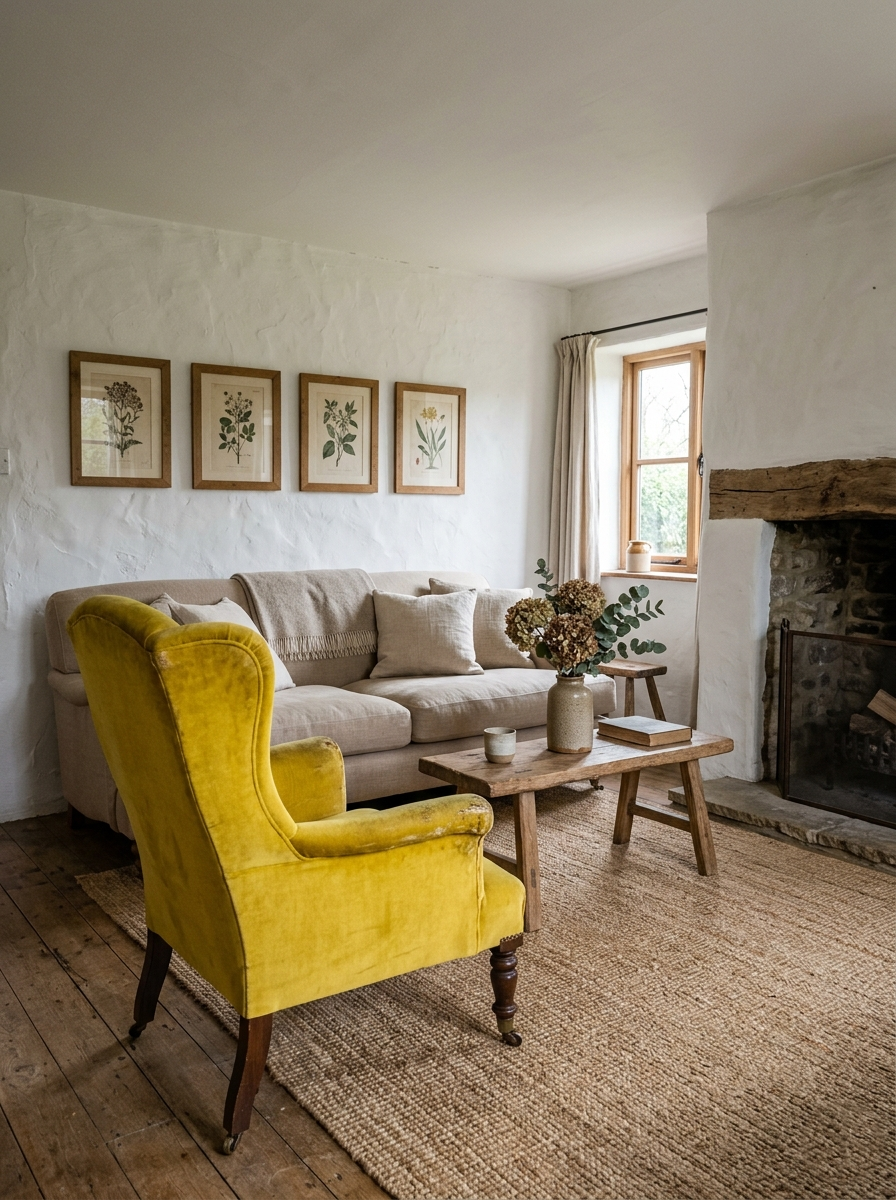
MC&Co note that tabletop and accessories are the most commercially accessible entry points into this aesthetic, and that holds for residential application too. Start with a single acid element: a set of ceramics, a vintage chair recovered in an unexpected colour, a set of kitchen pulls in cobalt. Give it the best position and let it do its work.
Let Pattern Build Gradually
Acid Cottage uses pattern as a structured layer: florals, stripes, checks, symbolic motifs, stacked with intent. But the stacking works because each layer is considered. Add one pattern at a time and see how it reads before adding the next.
Lean on Vintage Pieces
New acid-coloured furniture in a cottage interior usually looks wrong. The patina is missing. A vintage or aged piece carries brightness differently — the history in the object absorbs and softens the colour. This is one aesthetic where sourcing matters more than buying.
Watch the Light
High-chroma colour changes entirely under different light conditions. What reads as energising in morning sun can feel harsh under tungsten in the evening. Before committing, observe the colour in the space at different times of day and in different weather.
What to Avoid
– Matching the acid element to anything else. It should stand alone.
– Introducing it into restful rooms on large surface areas.
– Buying everything new — the worn, imperfect, vintage quality is part of what makes the aesthetic work.
– Overloading. One clear acid statement in a well-constructed cottage interior is interesting. Five is visually exhausting.
– Ignoring your own nervous system. Some people find saturated colour genuinely dysregulating. If you are one of them, this aesthetic is not for you, and that is completely fine.
Is It Worth Following?
When a trend forecasting house names something, it usually means the signal has been building for long enough to be commercially significant. Acid Cottage is not a social media flash — it sits within a broader, sustained movement toward self-expression in the home, which is not going anywhere.
Whether you choose to engage with it or not, the underlying design logic is worth understanding. The tension between softness and boldness, between age and brightness, between the rustic and the unexpected — these are productive contrasts. They are what makes a space feel genuinely inhabited rather than simply finished.
If you are drawn to this direction, the question worth sitting with is: which element is the real you? The cottage, or the acid? The answer will tell you how to weight the balance.
If it is the cottage, use the acid as a single gesture of confidence. If it is the acid, let the cottage do the grounding work it does so well.
Either way, the space will be yours.
CREDIT